


Sur une table européenne ordinaire, deux saveurs occupent presque tout l’espace : le salé et le sucré. Le piquant apparaît par touches, l’acide se limite à la vinaigrette, et l’amer a été chassé des étals par soixante ans de sélection variétale qui l’a jugé désagréable.
La grille chinoise classique ne propose pas d’ajouter un aliment miracle. Elle propose de vérifier qu’aucune des cinq saveurs ne manque à l’appel dans un même repas, et de doser leur poids respectif. C’est une méthode de composition, pas une pharmacopée, et elle se transpose sans difficulté avec ce qu’on trouve au marché fin septembre.
Voici comment cette grille s’organise, ce que chaque saveur recouvre réellement, l’étape où presque tout le monde se trompe, et trois menus complets construits selon cette logique, avec des ingrédients disponibles en France.
Le principe tient en une page
- Cinq saveurs : acide, amer, doux, piquant, salé. Aucune n’est bonne ou mauvaise en soi.
- Le doux fait la base : céréales, courges, racines, légumineuses. Il occupe la plus grosse part de l’assiette.
- L’amer est le grand absent des repas actuels. C’est l’étape critique de la méthode.
- L’acide et le piquant se dosent par petites touches : une cuillère de vinaigre, une râpée de gingembre.
- Le salé arrive vite à saturation. Sauce de soja, miso et algues comptent comme du sel.
- Une saveur oubliée se rattrape dans le repas suivant, pas dans la même assiette à toute force.
- Ce n’est pas un traitement : une douleur digestive qui s’installe se dit à un médecin.
Cinq mouvements, cinq saveurs : la charpente du système
Le système associe chaque saveur à l’un des cinq mouvements — bois, feu, terre, métal, eau — et à un couple de fonctions internes. L’acide va avec le bois, l’amer avec le feu, le doux avec la terre, le piquant avec le métal, le salé avec l’eau. Ces correspondances figurent dans les textes fondateurs de la médecine traditionnelle chinoise et ont été systématisées ensuite, siècle après siècle.
Un point de vocabulaire évite un contresens fréquent. Quand ces textes parlent de foie ou de rate, ils désignent des ensembles de fonctions dans un modèle ancien, pas les organes décrits par l’anatomie moderne. Traduire « l’acide entre au foie » par « le vinaigre agit sur mon foie » revient à mélanger deux systèmes qui ne parlent pas de la même chose.
Un passage classique donne la répartition d’un repas : les céréales nourrissent, les légumes remplissent, les fruits complètent, les produits animaux apportent un supplément. La hiérarchie est claire et elle contredit assez frontalement l’assiette occidentale contemporaine, organisée autour de la portion de viande ou de poisson.
Acide : vinaigre, agrumes et légumes fermentés
La tradition prête à l’acide une action de resserrement : il rassemble, il retient, il réveille. Dans la cuisine, c’est la saveur qui relance un plat fade sans ajouter de sel, ce que tout cuisinier vérifie en pressant un quartier de citron sur un légume trop sage.
Au marché de fin septembre, le rayon est fourni : pommes acidulées, dernières tomates, groseilles, oseille, cornichons, choucroute crue, laits fermentés, vinaigres de cidre et de riz. Une cuillère à soupe de vinaigre dans un bouillon ou trois lamelles de pomme dans un plat de chou suffisent à installer la saveur.
La quantité compte davantage que le produit. L’acide en excès agresse l’émail dentaire et gêne les personnes sujettes au reflux. Une touche à chaque repas, pas un verre de vinaigre le matin : la version buvable de cette saveur fait l’objet d’un commerce entier qui n’a rien à voir avec la grille classique.
Amer : la saveur qui a disparu des assiettes
C’est ici que se joue la différence entre un repas construit et un repas qui se contente d’être bon. L’amer a été sélectionné à la baisse dans presque tous les légumes vendus en supermarché, parce qu’il fait fuir l’acheteur. Résultat, une majorité de repas n’en contient plus du tout.
La tradition lui attribue une fonction de descente et d’assèchement, et le range du côté du feu. Sans se prononcer sur ce modèle, on peut constater une chose simple à table : l’amer ralentit le repas. Une feuille d’endive crue ou quelques feuilles de scarole obligent à mâcher, à saliver, et coupent la mécanique de la fourchette qui enchaîne.
Les produits ne manquent pas : endive, scarole, frisée, roquette, pissenlit, radis noir, céleri-branche, chou de Bruxelles en début de saison, artichaut en fin, cacao non sucré, café, zeste d’agrume. Deux cuillerées de scarole en fin de repas suffisent à occuper la place, et le goût s’éduque en trois semaines.
Doux : ni sucré, ni dessert
Le doux de la grille chinoise n’est pas le sucré du dessert. Il recouvre le riz, le millet, l’avoine, la courge, la carotte, la patate douce, la châtaigne, les lentilles, le pois chiche, le poulet, le bœuf : tout ce qui est neutre, nourrissant et sans arête gustative.
Cette confusion coûte cher. Beaucoup de gens qui découvrent le système en concluent qu’il faut « manger doux » et se servent une part de gâteau, alors que la tradition rangeait le sucre concentré parmi les excès à surveiller. Le doux, dans ce cadre, c’est le bol de riz, pas la pâtisserie.
C’est aussi la base quantitative du repas. La céréale et les racines occupent la plus grosse part de l’assiette, les autres saveurs se répartissent autour. Une assiette de septembre bien construite peut ainsi être composée à moitié de courge rôtie et de millet, sans que rien y paraisse austère.
Piquant : gingembre, poireau, moutarde
Le piquant est décrit comme dispersant : il fait circuler vers la surface, réchauffe et ouvre. C’est la saveur des débuts d’automne, celle qu’on retrouve dans les bouillons de poireau, l’ail, l’oignon, la ciboule, le radis, la moutarde, le raifort, le poivre, la cannelle et le clou de girofle.
Le gingembre frais mérite une mention à part, parce qu’il change un plat pour presque rien. Un centimètre râpé dans un bouillon de fin de cuisson, un peu de zeste de citron, et une soupe de légumes ordinaire devient nettement plus intéressante. C’est aussi le produit le plus facile à garder : entier, au réfrigérateur, il tient plusieurs semaines.
Deux réserves accompagnent cette saveur. Les personnes sujettes au reflux, à la gastrite ou aux hémorroïdes supportent mal le piquant appuyé, et le gingembre consommé en grande quantité fait partie des produits à signaler à son médecin quand on prend un anticoagulant. La touche, encore une fois, plutôt que la cuillerée.
Salé : algues, sauce de soja et la limite à ne pas franchir
Le salé assouplit et fait descendre, dit la tradition, qui l’associe à l’eau et à l’hiver. Dans une cuisine d’inspiration chinoise, il arrive par trois voies principales : la sauce de soja ou le tamari, le miso, et les algues comme le kombu, le wakamé ou le nori.
Ces trois voies sont du sel. Une cuillère à soupe de sauce de soja apporte l’équivalent de plusieurs pincées, et un plat assaisonné à la fois au tamari, au miso et au bouillon dépasse largement ce que l’on croit avoir mis. Les repères publics de santé situent la cible autour de cinq grammes de sel par jour pour un adulte, quand la consommation moyenne observée reste nettement au-dessus.
Une deuxième vigilance concerne les algues, très riches en iode, en particulier le kombu. Une consommation régulière et importante n’est pas neutre pour la thyroïde, et les personnes suivies pour un trouble thyroïdien doivent en parler avec le médecin qui les suit avant d’en faire une habitude. Sur ce point comme sur le sel, la documentation officielle sur l’alimentation reste la référence à consulter.
Le tableau de correspondance, avec les produits du marché
Le tableau ci-dessous met en regard la saveur, le mouvement qui lui est associé dans la tradition, ce qu’elle est censée faire, et ce qu’on trouve concrètement en septembre en France. La colonne de droite est la seule qui serve à faire les courses.
| Saveur | Mouvement | Action attribuée | Produits disponibles |
|---|---|---|---|
| Acide | Bois | Resserre, retient | Vinaigre de cidre, citron, pomme acidulée, cornichon, choucroute crue |
| Amer | Feu | Fait descendre, assèche | Endive, scarole, roquette, pissenlit, radis noir, cacao non sucré |
| Doux | Terre | Nourrit, harmonise | Riz, millet, courge, carotte, châtaigne, lentille, pois chiche |
| Piquant | Métal | Disperse, réchauffe | Gingembre, poireau, ail, oignon, moutarde, cannelle |
| Salé | Eau | Assouplit, fait descendre | Sauce de soja, miso, algues, sardine, anchois |
Construire l’assiette en six étapes
La méthode se déroule toujours dans le même ordre, et elle prend moins d’une minute une fois qu’on l’a en tête. Elle sert autant à composer un repas qu’à rattraper un menu déjà décidé.
- Poser la base douce. Une céréale, une racine ou une légumineuse, pour environ la moitié du volume de l’assiette. C’est le socle, et il se choisit en premier.
- Choisir la cuisson. Bouilli, vapeur, sauté ou rôti : la cuisson longue adoucit, la cuisson vive garde du mordant. Elle influence le résultat autant que l’ingrédient.
- Ajouter l’amer, et c’est l’étape critique. Une poignée de feuilles, quelques lamelles de radis noir, deux cuillerées de chicorée cuite. Si vous ne devez retenir qu’un geste de cet article, c’est celui-là : c’est la saveur qui manque neuf fois sur dix.
- Placer une touche acide. Une cuillère de vinaigre, un filet de citron, quelques cornichons hachés. Elle se met en fin de cuisson ou au moment de servir, pour ne pas être détruite par la chaleur.
- Doser le piquant. Gingembre râpé, ail, poireau fondu, un tour de moulin. Une seule source suffit par plat, sans quoi les arômes se battent entre eux.
- Compter le salé en dernier. Additionnez ce que vous avez déjà mis en sauce de soja, miso, bouillon et fromage avant de saler à nouveau. Neuf fois sur dix, il n’y a plus rien à ajouter.
Un dernier réglage porte sur l’ordre du repas. Le bouillon chaud en ouverture, la base douce au centre, l’amer et l’acide plutôt vers la fin : cette progression est celle des tables chinoises traditionnelles, et elle a le mérite de placer la saveur difficile à un moment où l’on n’a plus faim au point d’être pressé. La question du rythme des repas, elle, se pose ailleurs, et le sujet du jeûne intermittent avec ses réserves se traite pour lui-même.
Trois menus complets, du marché à la table
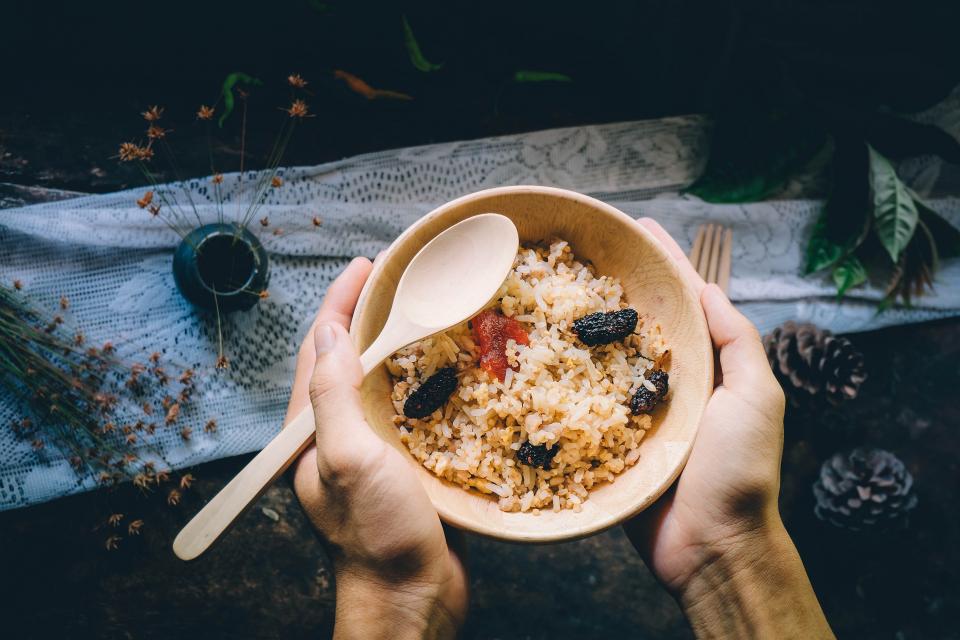
Les trois menus qui suivent couvrent les cinq saveurs sans produit exotique et sans matériel particulier. Les quantités sont laissées libres : c’est l’équilibre entre les saveurs qui est réglé, pas les grammages.
Menu de semaine, trente minutes, une casserole et une poêle
Bouillon court de poireau et gingembre, avec un petit morceau de kombu retiré avant de servir. Millet ou riz complet en base. Chou blanc et carotte sautés à l’ail. Trois lamelles de radis noir marinées dix minutes dans du vinaigre de cidre. Une endive crue coupée en biseau pour finir. Les cinq saveurs y sont, et le tout tient dans une demi-heure.
Menu du dimanche, deux heures dont une sans surveillance
Soupe d’orge et de courge relevée d’une cuillère de miso hors du feu. Poulet mijoté au gingembre, poireau et un peu de sauce de soja. Navets et carottes glacés. Salade de scarole aux noix, vinaigrette au cidre. Poire pochée au citron en fin de repas. L’amer arrive ici par la scarole et le navet, l’acide par la vinaigrette et le citron.
Menu sans produit animal
Lentilles vertes cuites avec laurier et ail. Tofu grillé arrosé de tamari et de gingembre râpé. Chou frisé sauté à feu vif, deux minutes, encore ferme. Une cuillerée de choucroute crue en accompagnement. Millet en base et quelques éclats de noisette. La saveur amère vient du chou et se renforce, si besoin, avec quelques feuilles de roquette.
Cinq façons de transformer une grille en régime
Le système supporte mal d’être pris au pied de la lettre. Cinq dérives reviennent chez les personnes qui s’y intéressent sérieusement, et toutes finissent par appauvrir l’assiette au lieu de l’enrichir.
- Vouloir les cinq saveurs à chaque assiette. L’unité pertinente est le repas, voire la journée. Une soupe n’a pas à contenir tout le système.
- Supprimer une saveur entière parce qu’un texte la déconseille dans un cas particulier. Une éviction durable se décide avec un professionnel, pas avec un tableau.
- Confondre saveur et effet. Manger amer ne « nettoie » aucun organe, et aucun aliment ne draine quoi que ce soit.
- Empiler les sources de salé en croyant respecter la tradition, alors que le sel reste du sel quelle que soit sa provenance.
- Acheter le système en poudre. Les compléments vendus autour de ces principes coûtent cher et ne remplacent pas un légume amer à deux euros le pied. Le tri entre tradition et argument commercial vaut aussi pour les aliments dits vibratoires.
Ce qui relève d’un professionnel de santé
Cette grille organise une assiette. Elle ne diagnostique rien, ne traite rien, et ne remplace aucun suivi. La confusion se glisse facilement, parce que le vocabulaire ancien emprunte des noms d’organes et donne l’impression de parler médecine.
Plusieurs situations demandent un avis avant toute modification durable : grossesse et allaitement, diabète, insuffisance rénale, hypertension et régime pauvre en sodium, trouble thyroïdien, maladie inflammatoire de l’intestin, traitement anticoagulant. Le pamplemousse, souvent proposé du côté de l’amer et de l’acide, interagit avec plusieurs médicaments courants : c’est une question à poser au pharmacien, pas un détail.
Trois signaux imposent une consultation plutôt qu’un ajustement de menu : une douleur digestive qui revient, une perte de poids que l’on n’a pas cherchée, et une liste d’aliments interdits qui s’allonge de semaine en semaine. Ce dernier point est le plus discret et le plus sérieux. Pour le reste, l’approche générale de la nutrition dite énergétique gagne à être lue avec la même prudence.
Questions fréquentes
Faut-il des ingrédients chinois pour appliquer cette grille ?
Non. Un vinaigre de cidre, une endive, du gingembre, du riz et une sardine couvrent les cinq saveurs sans quitter le marché du quartier. La sauce de soja et le miso sont pratiques mais remplaçables par du sel et un bouillon maison.
Le doux correspond-il aux glucides ?
Pas exactement. La catégorie recouvre des aliments neutres et nourrissants, ce qui inclut le riz et la courge mais aussi la viande de bœuf ou le poulet. C’est un critère de goût dans un système ancien, pas une catégorie de nutriments.
Que faire si une saveur manque à la fin du repas ?
Rien d’urgent. Le lendemain existe, et forcer un ingrédient pour cocher une case donne un plat déséquilibré. Le seul rattrapage vraiment utile porte sur l’amer, parce que c’est celui qui manque semaine après semaine.
Peut-on suivre cette approche avec des enfants ?
La composition en elle-même ne pose pas de difficulté, et l’exposition progressive à l’amer fait partie de l’éducation du goût. Ce qui n’a pas sa place, ce sont les évictions et les jeûnes : chez l’enfant, toute restriction se décide avec le médecin qui le suit.
Combien de temps avant de trouver l’amer agréable ?
Compter deux à trois semaines d’exposition régulière, en petite quantité et associée à un corps gras ou à une note douce. La cuisson à l’eau puis l’égouttage adoucissent la chicorée et le radis noir, ce qui permet de commencer sans se braquer.
Une assiette où les cinq saveurs sont présentes ne demande ni budget particulier ni magasin spécialisé. Elle demande surtout de racheter des légumes amers, ceux que l’industrie a passé un demi-siècle à retirer des rayons.